


08 May 2025
The heat-resistant temperature of high-temperature resistant sleeving shrink tube should be around 4
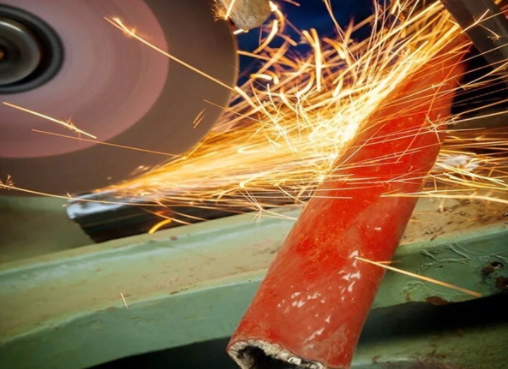
High-temperature resistant sleeve
The other day, I received an inquiry from a customer. The medical heat shrink tube MT2 required by the customer must be used under extremely high temperature conditions, with a normal operating temperature of 200°C. Therefore, limit testing is required, and the heat resistance temperature of heat shrink tubing should be around 400°C.
MT2 - Medical grade ultra-thin LDPE heat shrink tubing
One of the disadvantages of plastics compared to traditional materials such as metals, ceramics, and glass is their low heat resistance. This often limits its use at high temperatures. In plastic materials, heat resistance varies depending on the type of plastic. Some have very low heat resistance, while others have high heat resistance. Heat-resistant plastics generally refer to a type of plastic product with a deflection temperature of more than 200 degrees under load.
Our MT2 Medical Grade Slim LDPE Heat Shrink Tubing is made of medical-grade polyolefin with a 2.5:1 shrink ratio. It has the thin-walled and smooth properties required for surgical invasive devices. It is a heat shrink tube that can be used for excellent electrical insulation performance and insulation protection of electric surgical instruments, which is widely used in medical devices. Full shrinkage temperature over 110°C. However, LDPE's heat resistance limit is around 200°C, which cannot meet customer needs.
MT2 Medical Heat Shrink Tubing Coil
Therefore, we recommend that customers use MTP medical grade PTFE heat shrink tubing. MTP is made of high-performance medical-grade PTFE material. Teflon has the best physical properties of any plastic. It has electrical properties, low coefficient of friction, and solvent. It is corrosion-resistant, heat-resistant, and has the highest performance to provide the most reliable protection for coated medical devices. The full shrinkage temperature is more than 350°C, which can be used for a long time at a high temperature of 260°C, and the heat resistance limit is more than 500°C.
The customer was very satisfied with the test results after receiving the sample, which could fully meet their requirements for the use of high-temperature heat shrink tubing.
Heat shrink tube high temperature test
The specific heat resistance of ordinary high-temperature heat shrink tubes can be improved according to the customer's usage scenario.
Commonly used plastic heat resistance modification methods:
The heat resistance of plastics can be improved by appropriate reforming methods. Specific heat resistance modification methods include filling heat resistance of plastics, improving heat resistance of plastics, adding heat resistance modifiers to modify plastic heat resistance, compounding plastics, etc. - Resistance modification, plastic cross-linking heat resistance modification, plastic shape control modification, etc.
1. Fill plastic and change heat resistance
Along with all but organic fillers, most inorganic mineral fillers significantly increase the heat resistance of plastics. Commonly used heat-resistant fillers are calcium carbonate, talc, wollastonite, mica, calcined clay, bauxite, and asbestos. For example, mica can reach a maximum use temperature of 1000°C, which is the most effective heat-resistant modified filler. The smaller the particle size of the filler, the higher the reforming effect.
2. Enhance the heat resistance of plastics to changes
The effect of increasing the heat resistance of plastic is better than filling. This is mainly due to the very high heat resistance temperature of most fibers, with melting points above 1500°C. Commonly used heat-resistant fibers mainly include asbestos fiber, glass fiber, carbon fiber, whiskers, polyamide fiber and acrylic fiber.
3. Add heat-resistant modifiers to plastics for heat-resistant modification
The heat resistance is mainly phenyl maleimide. For every 1% heat-resistant agent added to plastic, the heat-resistant temperature rises by about 2°C. For example, if 20% phenyl maleimide is added to ABS, the flex temperature under load can reach 125-130°C. For another example, adding 20% phenyl maleimide to HPVC can reach the Vicat softening point of 100-120°C.
High temperature heat shrink tubing
4. Change the heat resistance of the plastic mixture
Plastic compound for improved heat resistance. In other words, heat resistance is improved by mixing low heat resistance resins and high heat resistance resins. This method is not enough to change heat resistance, but it basically has the advantage of improving heat resistance without affecting other original properties.
5. Plastic cross-linking heat resistance modification
For heat-resistant pipes and cables, plastic cross-linking is often used to improve heat resistance.
6. Shaping control and heat resistance change
Bidirectional stretch and heat resistance changes made of plastic. The principle of biaxial tensile heat resistance modification is that the crystal particles become thinner due to stretching, the crystal arrangement is tighter, the crystallinity increases, the orientation increases, and the heat resistance is improved. Heat resistance changes due to plastic annealing treatment. The principle of annealing to change heat resistance is to reduce the internal stress of the product, improve the irregular crystal structure, and promote continuous crystallization.