27 Feb 2026
Introduction to High-Temperature Fire-Resistant Blankets
Introduction to high-temperature resistant fireproof blankets!
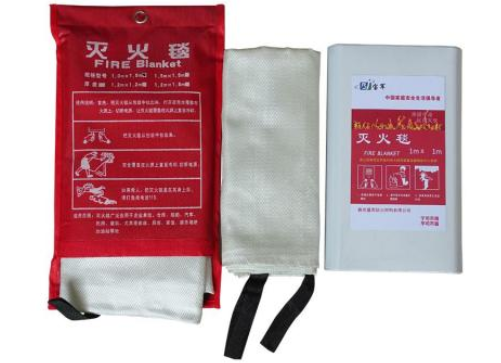
There are many fire extinguishers on the market now, and fire blankets are one of them. Do you know how to use a fire blanket?
What should I pay attention to when using a fire blanket? The following editor will briefly introduce the relevant knowledge of fire
blankets to you, hoping to be helpful to you.
1. What is a fire blanket?
Fire blankets are made of flame retardant fiber fabric and treated with a special process. Compact and resistant to high temperatures,
it can prevent or isolate combustion. It has flame retardant, heat resistance, non-combustible, corrosion resistance, insect resistance
and other properties, effectively reducing fire hazards, increasing escape opportunities, reducing casualties, and protecting the safety
of people's lives and property.
2. What are the types of fire blankets?
1. Classification by substrate:
Due to the different base fabrics used, they can be divided into carbon fiber fire blankets, glass fiber fire blankets, ceramic fiber fire
blankets, etc.
2. Classification by use:
According to the classification of use, it can be divided into two types: household fire blanket and industrial fire blanket.
3. What is the principle of fire extinguishing blanket?
The principle of fire extinguishing is to lay a layer of fire blanket on combustible materials to prevent the burner from absorbing
oxygen and extinguishing the fire, covering the fire source, blocking the air, and achieving the purpose of fire extinguishing.
Fire blankets are mainly used in enterprises, ships, automobiles, shopping malls, civil buildings, etc. It is especially suitable for
fire-prone places to prevent the spread of fire, such as kitchens of homes and restaurants, hotels, entertainment venues, gas stations,
etc. The purpose of protecting escape.
4. What are the benefits of fire blankets?
It can be reused without damage. Comparison with water-based and dry powder fire extinguishers:
1. There is no expiration date.
2. There is no secondary pollution after use.
3. Insulation and high temperature resistance.
4. Easy to carry, simple to set, quick to use, can be used repeatedly without loss.
5. The use and use of fire blankets.
Escape from the fire: Wrap your whole body in a fireproof blanket, wear a gas mask, leave the fire quickly, isolate the fire, and
reduce the temperature of the fire.
Industrial safety: Arc welding, steel mills, boiler rooms, and chemical laboratories have sparks that catch fire easily and can
withstand spark spatter, slag, and welding spatter. It is used to isolate the workplace and separate the work layer to prevent
fire risks that may occur during welding.
Initial fire extinguishing: The fire can be extinguished in a short time. In the early stages of a fire, the fire blanket is directly
covered by the source of the fire or burning objects.
Earthquake Escape: Use a flexible and thick structure to fold the fire blanket and place it on your head to reduce the impact
of falling objects.